

Introduction
If you’re selling via Amazon and using FBA (Fulfillment by Amazon), you probably thought the fee environment might be stable for a while — but that expectation is about to be challenged. The topic of Amazon FBA fee increases in 2026 is catching serious attention among sellers. While the headline may seem small (“only eight cents per unit on average”), when you move thousands of units, those small increments add up fast — and when layered on top of other fee changes, inventory risks, and logistics shifts, the margin squeeze becomes very real.
In this comprehensive guide, we’ll walk you through exactly what Amazon is changing, how it impacts your business, and most importantly what you can do now to stay ahead and protect your profit margins. Whether you’re a high-volume brand, a private label seller, or a growing e-commerce business using Stock and Ship’s Amazon FBA prep, storage, and fulfillment services, this matters for you.
What’s Changing: Overview of Amazon FBA Fee Increases in 2026?
According to analysis from Seller-consulting firms, Amazon’s US FBA fee changes for 2026 are more granular than ever. For example, one summary notes: “FBA fees will increase by an average of $0.08 per unit sold — less than 0.5% of an average item’s selling price.”
But the devil is in the details: some size/price tiers see no change, others see significant jumps (up to $0.50+ per unit). On top of that, Amazon is phasing out its own prep & labeling services (effective January 1, 2026) which shifts cost and operational burden back to sellers or their 3PLs.
As a fulfillment service provider that supports Amazon FBA sellers, Stock and Ship must help clients model these upcoming cost shifts, evaluate whether to raise pricing, shrink/optimize SKUs, adjust packaging, rethink inventory allocation, and ensure prep & labeling compliance (because mistakes will cost more than ever).
Breakdown of the Key Fee Changes
Here we present the main areas of change you need to be aware of.
Fulfillment Fee Increases by Size & Price
For standard-size items, Amazon is introducing more price-based tiers, meaning your fee increase depends on both size and sale price. For example (as analysts report):
- Small Standard-Size (≤18″ × 14″ × 8″ and ≤20 lbs)
- Priced <$10: ~$0.12 increase
- $10-50: ~$0.25 increase
- Above $50: ~$0.51 increase
- Large Standard-Size (exceeds small dims but ≤60″ longest side, ≤70 lbs)
- Below $10: no change
- $10-50: ~$0.05 increase
- Above $50: ~$0.31 increase
These figures mean if you sell lots of units above $50 in the small standard size, you’ll feel a bigger impact. If you’re selling low-price items (<$10) in large standard size, you may see no increase. The takeaway: examine your SKU mix carefully.
Multi-Channel, Buy With Prime, Storage & Transport Fee Hikes
In addition to fulfillment fees, Amazon is increasing other cost-centres:
- “Buy with Prime” per-unit fee — average increase: ~$0.24
- Multi-Channel Fulfillment (MCF) — per-unit increase: ~$0.30
- AWD (Amazon’s warehousing & distribution in the U.S.) West Region storage fee — jump to ~$0.57 per cubic foot per month (~19% increase)
- AWD transportation base rate — ~$1.15 → $1.40 per cubic foot (~22% increase)
- AWD managed transportation — $1.04 → $1.26 per cubic foot (~21% increase)
If you store or distribute via Amazon MCF With Prime, you’ll need to factor these into your cost projections. Inventory held in the West region may become significantly more expensive.
Ending of Amazon’s Prep & Labeling Services
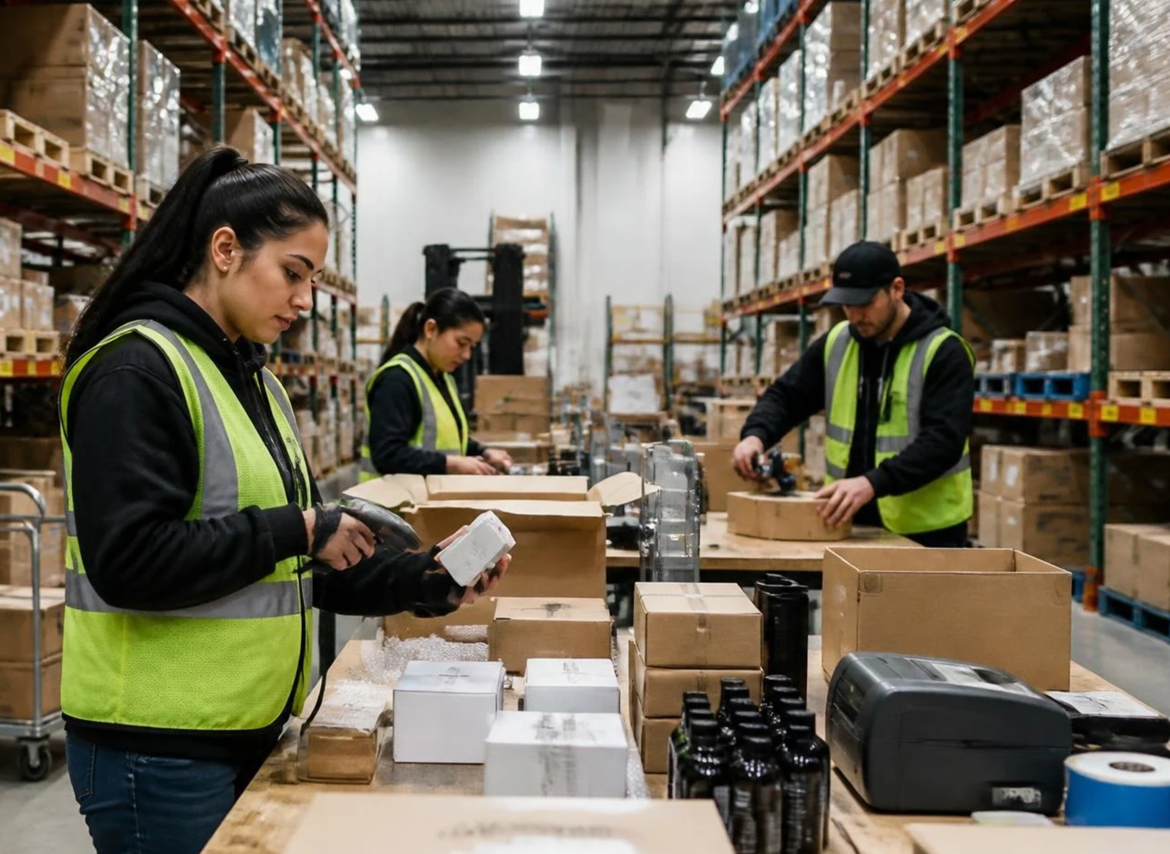
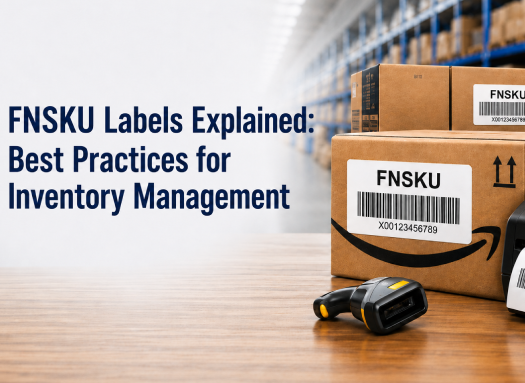
One of the biggest operational changes: starting January 1, 2026, Amazon will stop offering prep and labeling (in the U.S.) for FBA inventory. That means for units you ship into FBA, you can no longer rely on Amazon to do FNSKU labeling, poly-bagging, bubble-wrapping, or any manual prep.
If you send shipments that don’t arrive fully prepped & labeled, consequences may include:
- “Buy with Prime” per-unit fee — average increase: ~$0.24
- Multi-Channel Fulfillment (MCF) — per-unit increase: ~$0.30
- AWD (Amazon’s warehousing & distribution in the U.S.) West Region storage fee — jump to ~$0.57 per cubic foot per month (~19% increase)
- AWD transportation base rate — ~$1.15 → $1.40 per cubic foot (~22% increase)
- AWD managed transportation — $1.04 → $1.26 per cubic foot (~21% increase)
Sellers must now either: perform prep in-house, outsource to a 3PL (such as Stock and Ship), or ensure products qualify for “Ships in Product Packaging” (SIPP) or similar self-certified packaging options.
Low-Inventory & Aged Inventory Fee Changes
Amazon is also tightening how they manage inventory through fee pressures:
- Low-Inventory-Level Fee: Starting in 2026, this fee is calculated at the seller-FNSKU level (not parent-ASIN) and will include Small Bulky and Large Bulky products (previously exempt).
- Aged Inventory Fee: For items stored 12–15 months, the fee increases by approximately $0.15–$0.30 per unit per month; for items stored >15 months, fees jump to approximately $0.35 per unit or $7.90 per cubic foot (whichever is greater).
The net effect: if you carry slow-moving stock, the cost of doing so is increasing. If you run lean inventory to avoid storage fees, you could trigger low-inventory fees. Inventory management just became more critical.
Inbound Defect Fee Updates
Another change: Amazon is consolidating and increasing inbound defect fees (for mis-routed, abandoned, or deleted units). For 2026: standard-size products could incur $0.32-$1.74 per unit; bulky items up to $5.72 per unit for inbound defects.
That means prep accuracy, shipment routing, labelling, and first-time inbound compliance are now higher stakes.
Why Amazon Is Making These Changes?
Understanding the “why” helps you anticipate future shifts and align your business strategy accordingly. Some of the reasons behind these changes:
- Cost pressures: Amazon continues to invest in fulfilment, robotics, faster delivery, and labour. While shipping & logistics costs have risen across carriers (e.g., FedEx, UPS), Amazon is shifting more of the burden to sellers.
- Operational efficiency: By ending in-house prep/labeling and introducing more granular fee tiers, Amazon encourages sellers to optimise for their fulfilment-network model (e.g., fully packaged units, less manual handling).
- Incentivising better inventory behaviour: The low-inventory fees and aged-inventory surcharges push sellers toward better forecasting, smarter supply chain decisions, and faster turnover.
- Greater fee granularity = more fairness (on paper): Amazon’s commentary suggests that they believe their newer structure is “fairer” (i.e., better matching cost to fulfilment burden) though for many sellers it’s still a change.
For you as a seller working with a fulfilment partner like Stock and Ship, these structural changes mean you’ll need to sharpen your operational discipline, packaging strategy, and cost modelling.
Fill out the form for a free logistics consultation!

You can contact us directly and schedule your shipment now
How Sellers Should Prepare for Amazon FBA Fee Increases in 2026?
Preparation now gives you the best chance to absorb, mitigate or even avoid surprises. Here are key actions to take:
-
Audit your full SKU catalogue:
- Run each SKU through Amazon’s fee calculators (or your own model) with the new fee assumptions (fulfilment fee + storage + low-inventory risk + aged inventory risk).
- Identify SKUs whose profit margin will be squeezed hardest. These might be candidates for discontinuation or repricing.
-
Refine your prep & labelling strategy:
- Choose whether you’ll bring prep in-house (requires space, labour, training), outsource to a third-party prep centre (e.g., Stock and Ship), or shift products toward “Ships in Product Packaging” (SIPP) eligibility where possible.
- Ensure full compliance—one failed shipment after Jan 1, 2026 could mean no reimbursement if lost or damaged.
- AMZ PREP
- Start scaling your prep process now (rather than waiting until Q4/2025) to avoid bottlenecks.
-
Optimize your packaging:
- Evaluate whether you can reduce dimensional size or weight of units to fit into a lower fee tier.
- Consider SIPP certification or packaging redesign to qualify for lower fees.
- Work closely with your fulfilment provider (like Stock and Ship) to assess package cost vs fee savings.
-
Improve inventory forecasting & turn-rate:
- Aim to maintain ~60-90 days of supply to avoid low-inventory-level fees, while avoiding excessive older stock.
- Goat Consulting
- Implement tighter inventory monitoring (by FNSKU) so you avoid being understocked and triggering fees.
-
Review pricing and margin strategy:
- Test modest price increases where your brand supports it (3-5%) to absorb cost increases without damaging volume.
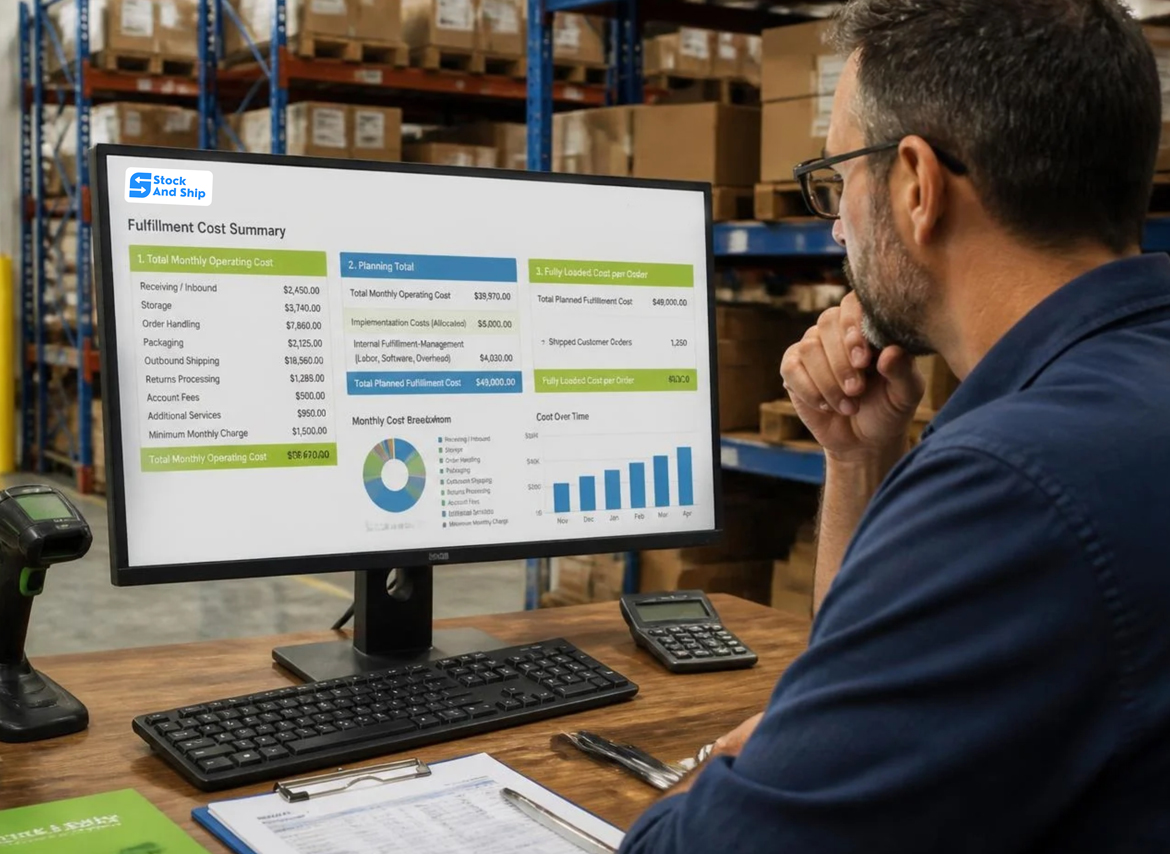
- Use profit-analytics dashboards and fee preview tools (Amazon’s or third-party) to model net margins post-changes.
-
Partner with a fulfilment expert:
- Use a fulfilment centre (Stock and Ship) experienced with Amazon compliance, packaging optimisation, and warehousing to help mitigate the new operational burdens.
- Ensure your fulfilment partner tracks fee changes and communicates how they impact your margin or cost-to-serve.
Turning the Fee Increase into an Advantage
While fee increases can feel like a negative, for proactive sellers there is a real opportunity to gain competitive advantage:
- Catalogue clean-up: Use the fee change as a forcing function to cut out weak SKUs, focus on high-turn, high-margin items and eliminate distractions.
- Efficiency improvement: Sellers who optimise packaging, streamline prep, and improve inventory management will see better cost-to-serve—and those advantages stack up.
- Differentiation via fulfilment excellence: If your fulfilment & prep operations are tighter than the competition, you’ll be better positioned to absorb cost increases without sacrificing margin or price.
- Better data-driven decisions: Use the fee change to invest in analytics (sell-through, inventory days, margin per unit) and make smarter SKU-by-SKU decisions—many competitors will struggle with this transition, giving you an edge.
- Communicate value to customers: If you can maintain margins without raising prices (or only modestly raise them) and still deliver speed & quality, you strengthen your brand’s reputation—especially during a period where many sellers might degrade service to protect margins.
Final Thoughts
The topic of Amazon FBA fee increases in 2026 is more than just “a few cents here and there.” It signals a shift in how Amazon expects sellers to operate: tighter inventory discipline, smarter packaging, full prep compliance, and sharper cost-modelling. If you ignore it, many SKUs that were marginally profitable may become unprofitable. But if you act now, optimise your operations, partner with a capable fulfilment center like Stock and Ship, and focus on your best performers, you can not only protect your margin—but potentially emerge stronger than many of your competitors.
The key takeaway: Don’t wait. Start modelling the changes now, refine your processes, test your pricing, and ensure your fulfilment operations are ready for January 2026 and beyond. Because when the execution bar is raised, the sellers who adapt win.
Frequently Asked Questions (FAQs)
When exactly do the Amazon FBA fee increases for 2026 take effect?
Many of the changes for the U.S. marketplace begin January 15, 2026 (fulfillment fee increases), while the elimination of Amazon’s prep & labeling services takes effect January 1, 2026.
Will Amazon increase referral fees or introduce new fee types in 2026?
For 2025 Amazon explicitly said they will not increase U.S. referral or FBA fees and will not introduce new fee types. For 2026 the information is less publicly detailed, but the major changes appear to be in fulfilment, storage, inventory-level and prep services rather than a broad referral-fee hike.
What happens if I send a shipment to Amazon after Jan 1, 2026 that is not fully prepped or labeled?
Amazon will reject shipments or return/dispose them at your expense, and items may not be reimbursed if lost or damaged. You must arrive at the fulfilment centre fully compliant with packaging, labelling, poly-bagging, etc.
How can I minimise the impact of the fee increases on my margins?
Some strategies: reduce packaging size/dimensions, optimise weight, enrol in SIPP certification if eligible, raise your price modestly, eliminate low-turn SKUs, improve inventory management, partner with a 3PL to reduce prep/labour cost, use Amazon’s fee calculators and analytics to model your profit per unit.
Do these changes affect only the U.S. marketplace or also international Amazon marketplaces?
The specific details referenced (U.S. marketplace) pertain to Amazon.com in the United States. While Amazon operates globally and may roll out similar structural changes in other regions, local fee schedules differ and you should check the local Amazon Seller Central announcements for your region. The global changes may lag or differ.