


Listen This Article
Introduction
Amazon has always adjusted its marketplace through gradual changes—an added fee here, a policy tweak there. But the Amazon AWD changes 2026 break that pattern. Instead of incremental updates, sellers are facing multiple interconnected shifts that affect storage, prep, fulfillment, and inbound compliance all at once.
At the center of this change is Amazon Warehousing and Distribution (AWD). Once viewed as a flexible buffer between factories and FBA, AWD is now governed by stricter economics. With AWD storage costs increase, the removal of Amazon-provided prep, and higher fulfillment fees, sellers must rethink how inventory flows through Amazon’s network.
This article explains what changed, why it matters, and how Amazon sellers can adapt their operations to protect margins in 2026 and beyond.
Why Amazon AWD Changes 2026 Signal a Bigger Shift?
The January 2026 updates are not isolated decisions. Together, they signal a broader shift in how Amazon expects sellers to operate inside its ecosystem. Efficiency is no longer encouraged—it is enforced through pricing and policy.
Amazon is reducing tolerance for inefficiencies such as excess storage, slow-moving inventory, incorrect labeling, and reactive decision-making. Sellers who previously relied on Amazon to correct errors downstream are now expected to deliver inventory that is fully compliant before it ever reaches an Amazon dock.
The Amazon AWD changes 2026 effectively turn operational discipline into a competitive advantage. Brands with strong forecasting, clean inbound processes, and clear ownership of prep responsibilities will experience fewer disruptions. Those without these systems will feel the impact quickly through higher fees, penalties, and cash-flow pressure.
AWD Storage Costs Increase and the New Regional Reality
One of the most immediate and visible changes is the AWD storage costs increase, particularly in western U.S. regions. Amazon has introduced stronger regional pricing differences, making location a direct factor in profitability.
Inventory that sits longer or occupies more cubic space is now significantly more expensive to hold, especially when placed in higher-cost regions. This makes AWD less suitable as a long-term holding solution and more appropriate for inventory that moves predictably into FBA or other channels.
Sellers who treat AWD as a “set it and forget it” buffer risk paying for excess cube and dwell time. The new pricing structure forces brands to think more deliberately about where inventory is stored, how quickly it turns, and whether certain SKUs even belong in AWD at all.
This shift also pushes sellers to evaluate off-Amazon storage or regional diversification strategies rather than relying heavily on a single high-cost location.
Fill out the form for a free logistics consultation!

You can contact us directly and schedule your shipment now
The End of Amazon Prep and Why Upstream Accuracy Matters
As of January 1, 2026, Amazon fully discontinued FBA prep and labeling services in the U.S. This is one of the most disruptive elements of the Amazon AWD changes 2026, because it removes a long-standing safety net.
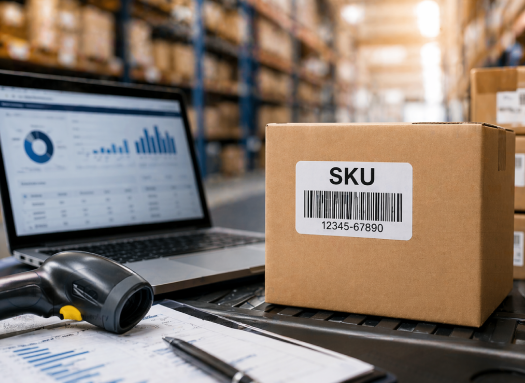
Previously, sellers could rely on Amazon to correct issues such as missing FNSKU labels, improper polybagging, or incomplete prep. That option no longer exists. Inventory that arrives without meeting Amazon’s exact requirements is now delayed, rejected, or penalized—with no reimbursement for errors that would have once been corrected.
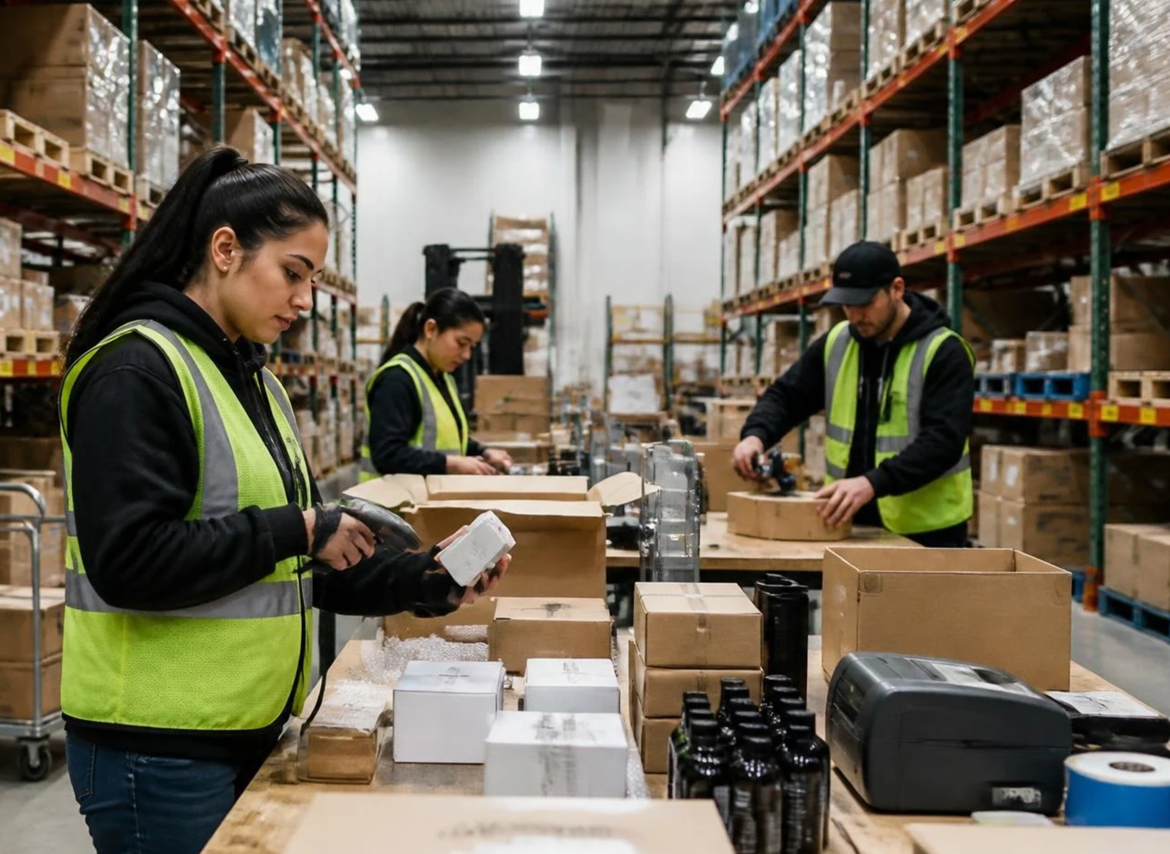
Responsibility has shifted entirely upstream. Prep, labeling, and quality checks must now happen at the factory or through a trusted third-party partner. Sellers who fail to enforce this upstream accountability face compounding consequences once inventory enters AWD or FBA.
For many brands, this has accelerated the move toward professional Amazon FBA prep and inspection services, where compliance is verified before inventory ever touches Amazon’s network.
Higher FBA Fees and How Costs Now Compound
In addition to AWD updates, Amazon increased U.S. FBA fulfillment fees in January 2026. While individual fee increases may appear modest, their real impact becomes clear at scale.
Fulfillment fees are charged per unit, not per order. This means multi-item purchases and high-volume SKUs amplify the cost impact. When combined with higher AWD storage costs, inbound penalties, and stricter aged inventory fees, even small increases can significantly reduce contribution margins.
For low-priced or margin-sensitive products, the new fee structure can turn profitable SKUs into loss leaders if pricing, packaging, or fulfillment strategies are not adjusted. Sellers who continue operating on outdated cost models risk selling volume without realizing they are eroding profit.
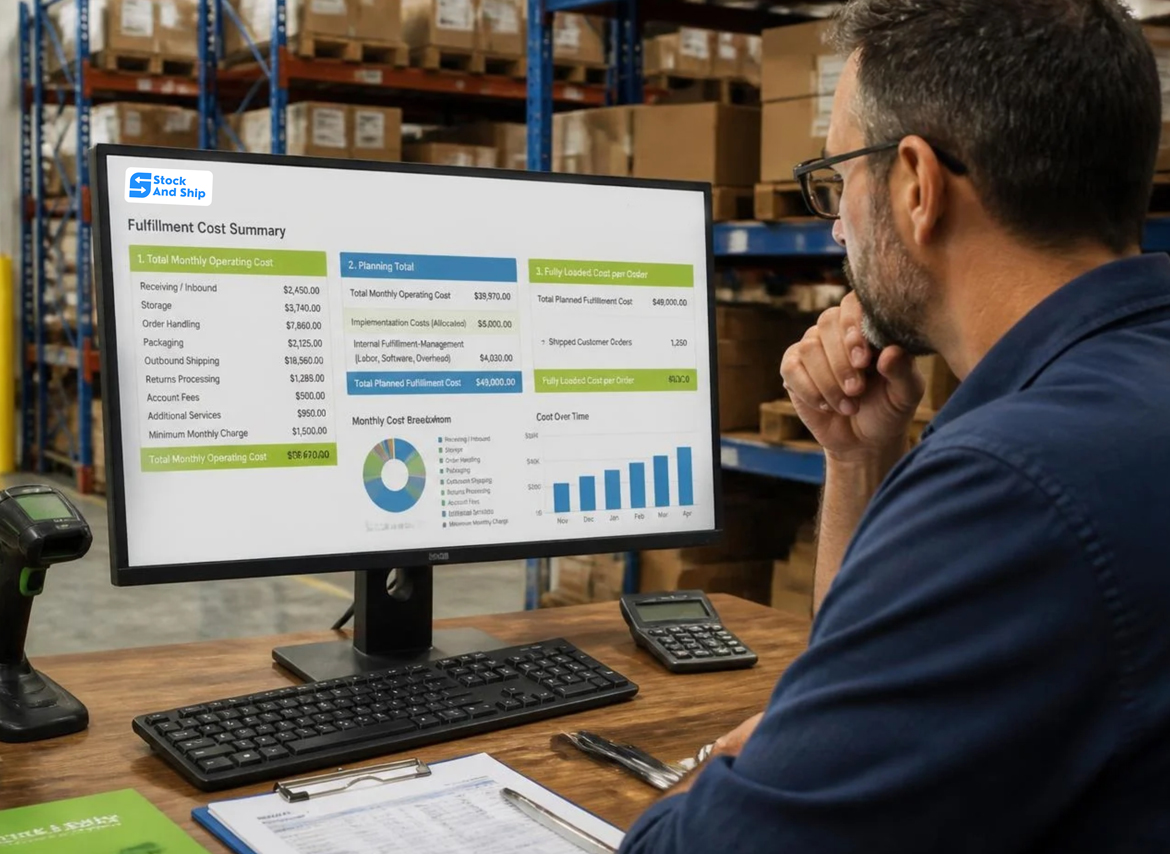
This makes SKU-level margin analysis essential. Sellers need to reassess which products should be scaled, optimized, repriced, or discontinued under the new economics.

What Sellers Should Do to Stay Profitable After the 2026 Changes?
To adapt to the Amazon AWD changes 2026, sellers must move from reactive problem-solving to proactive operational control. The following actions are now critical:
- Rebuild SKU-level contribution models using updated AWD storage, FBA fulfillment, and inbound compliance costs
- Push prep and labeling accountability upstream to factories or professional prep partners
- Reduce cube inefficiencies through better cartonization and packaging design
- Monitor inventory aging closely to avoid high-cost fee thresholds
- Treat AWD as a strategic flow-through hub rather than long-term storage
Many sellers are finding value in working with fulfillment partners like Stock and Ship, who specialize in AWD support, Amazon FBA prep, inventory storage, and multi-channel fulfillment. Having a single operational partner helps reduce errors, improve visibility, and keep costs predictable in an increasingly strict environment.
Frequently Asked Questions (FAQs)
What are the most important Amazon AWD changes in 2026?
The biggest changes include higher AWD storage costs, regional pricing differences, increased transport and box fees, and the complete removal of Amazon-provided prep and labeling services.
Why did Amazon increase AWD storage costs?
Amazon is incentivizing faster inventory turnover and better cube efficiency by making long dwell times and bulky storage more expensive.
Does Amazon still offer discounts on AWD services?
Discounts still exist, but they are harder to qualify for and depend on accurate forecasting, consistent replenishment, and operational discipline.
How does the removal of Amazon prep affect sellers?
All prep and labeling must now be completed before inventory reaches Amazon. Errors can result in rejection, penalties, and delayed sales.
How can sellers reduce risk under the new AWD model?
By improving upstream quality control, optimizing packaging, tracking inventory aging closely, and partnering with experienced prep and fulfillment providers.
Final Thoughts
The Amazon AWD changes 2026 are not a temporary disruption—they represent a permanent shift in Amazon’s operating philosophy. With AWD storage costs increase, the elimination of Amazon prep services, and higher fulfillment and compliance fees, Amazon is making inefficiency expensive.
Sellers who respond by tightening upstream processes, rethinking storage strategies, and actively managing inventory economics can still scale profitably. Those who rely on outdated assumptions or expect Amazon to absorb operational mistakes will face rising costs and shrinking margins.
In 2026, success on Amazon is no longer just about selling more—it’s about operating smarter at every step of the supply chain.