


Table of Contents
- Introduction
Why Accurate Amazon FBA Labeling Matters?
Incorrect Barcode Placement and Scannability Issues
Packaging Errors That Lead to Inventory Rejections
Mixing Up FNSKU, UPC, and Amazon FBA Label Requirements
Common Printing and Formatting Mistakes in FBA Labels
How Professional FBA Preparation Prevents Costly Errors?
Frequently Asked Questions (FAQs)
Final Thoughts
Why Accurate Amazon FBA Labeling Matters?
Every product shipped to Amazon fulfillment centers must follow strict barcode and packaging requirements. The purpose of an Amazon FBA Label is to help Amazon identify, track, store, and ship products accurately across its warehouse network.
When labeling standards are ignored, Amazon may:
- Delay inventory check-in
- Apply relabeling or manual processing fees
- Reject inbound shipments
- Mark inventory as unfulfillable
- Suspend future shipment privileges for repeated violations
Accurate Amazon FBA Labeling directly impacts operational speed and customer satisfaction. Properly labeled inventory moves faster through receiving departments, reducing warehouse processing time and minimizing inventory discrepancies.
Businesses handling high-volume shipments especially need consistent label management systems because even a small percentage of labeling errors can create large financial losses over time.
In many cases, sellers discover problems only after shipments arrive at Amazon warehouses. At that point, correcting errors becomes expensive and time-consuming. Preventing mistakes before shipping inventory is always more cost-effective than resolving warehouse issues later.
Incorrect Barcode Placement and Scannability Issues
One of the biggest causes of Amazon warehouse delays is poor barcode placement. Amazon scanners must quickly detect and read each Amazon FBA Label during receiving and fulfillment operations. If the barcode cannot scan instantly, products may require manual handling.
Common barcode placement mistakes include placing labels:
- Over packaging seams or curved surfaces
- Too close to box edges
- On shrink wrap with excessive glare
- Over existing manufacturer barcodes without fully covering them
- On uneven or wrinkled surfaces
Scannability problems also occur when sellers use low-quality printers or faded ink. Damaged labels can become unreadable during transportation, especially if products experience moisture, friction, or pressure inside cartons.
Another common issue is barcode duplication. If both the manufacturer UPC and the FNSKU remain visible, Amazon employees may accidentally scan the wrong code, causing inventory mismatches and fulfillment errors.
To improve barcode performance:
- Print labels using high-resolution thermal printers whenever possible.
- Use smudge-resistant label materials.
- Cover all conflicting barcodes completely.
- Keep labels flat, centered, and easy to scan.
- Perform sample barcode scans before shipment dispatch.
Consistent quality control during the labeling process helps prevent unnecessary processing delays inside Amazon fulfillment centers.
Packaging Errors That Lead to Inventory Rejections
Improper packaging is another major reason products fail Amazon receiving inspections. Even when the Amazon FBA Label itself is accurate, packaging violations can still trigger inventory rejection.
Amazon has detailed requirements for poly bags, boxed products, expiration dates, fragile items, and bundled products. Sellers who ignore these standards risk non-compliance penalties and inbound shipment delays.
A frequent mistake involves applying labels to removable packaging surfaces. For example, labels attached loosely to poly bags may detach during transportation. Once separated from the product, Amazon can no longer identify the inventory correctly.
Fragile products often face additional scrutiny. If packaging lacks adequate protection, warehouse staff may classify products as damaged upon arrival. This not only affects inventory availability but may also increase return-related losses.
Expiration date labeling mistakes are equally problematic. Amazon requires expiration dates to appear in a specific format and location. Missing or unreadable dates can immediately cause shipment rejection.
Another overlooked issue is carton-level confusion. Sellers sometimes place incorrect carton labels or fail to match shipment contents accurately with the shipping plan. This creates receiving discrepancies that delay inventory processing.
Strong packaging compliance requires careful inspection before shipment pickup. Businesses should establish internal verification procedures to ensure every product meets Amazon packaging standards consistently.
Mixing Up FNSKU, UPC, and Amazon FBA Label Requirements
Many new sellers misunderstand the difference between barcode types used within Amazon’s fulfillment system. This confusion often leads to incorrect FBA Labels and inventory tracking issues.
The three most common barcode types include:
- UPC (Universal Product Code)
- EAN (European Article Number)
- FNSKU (Fulfillment Network Stock Keeping Unit)
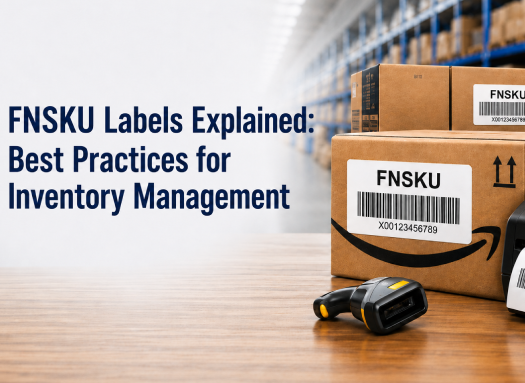
The FNSKU is typically the most important barcode for Amazon FBA inventory because it connects products directly to a specific seller account. If sellers accidentally use manufacturer barcodes instead of FNSKU labels, inventory may become commingled with products from other sellers.
Commingled inventory creates risks such as:
- Receiving counterfeit complaints
- Customer dissatisfaction due to product quality variations
- Incorrect inventory attribution
- Higher return rates
Another common mistake occurs when sellers print the wrong FNSKU for product variations. For example, different sizes, colors, or bundle versions may accidentally receive identical labels. This can result in incorrect customer shipments and account performance issues.
Some businesses also forget to update labels after changing packaging designs or SKU structures. Using outdated Amazon FBA Labeling information creates confusion during receiving and fulfillment.
To avoid these problems, sellers should maintain organized SKU databases and implement verification systems before printing labels in bulk.
Common Printing and Formatting Mistakes in FBA Labels
Even when barcode information is technically correct, formatting issues can still prevent successful scanning and compliance.
Poor printing quality remains one of the most overlooked causes of labeling failures. Low-resolution printers may produce blurry barcode lines that Amazon scanners cannot interpret properly.
Formatting mistakes commonly include:
- Incorrect label dimensions
- Improper margins
- Distorted barcodes
- Tiny unreadable fonts
- Missing product information
- Cropped barcode sections
Thermal transfer printers are generally preferred because they create durable, high-contrast labels suitable for warehouse environments. Inkjet printers may fade or smear more easily, especially during long-distance shipping.
Another issue involves using incompatible label templates. Amazon provides standardized label sizing requirements, and deviations from these specifications can affect scanning efficiency.
Sellers should also pay close attention to adhesive quality. Weak adhesive labels may peel off during transit or warehouse handling, leaving products unidentified.
Environmental conditions matter as well. Heat, humidity, and friction can damage poorly printed labels before products even arrive at fulfillment centers.
Businesses managing large inventories should regularly audit their printing systems and conduct barcode testing to ensure consistent label quality across all shipments.

How Professional FBA Preparation Prevents Costly Errors?
As Amazon compliance requirements continue evolving, many businesses choose professional FBA prep services to reduce operational risks. Experienced prep providers understand detailed Amazon FBA Labeling standards and help sellers maintain shipment accuracy.
Professional prep services typically handle:
- Product inspection
- Barcode verification
- FNSKU application
- Poly bagging and bundling
- Carton labeling
- Packaging compliance checks
- Shipment preparation audits
Working with trained specialists reduces the likelihood of costly receiving issues, especially for high-volume sellers managing complex inventory.
Outsourcing labeling and prep operations can also improve scalability. Businesses no longer need to rely entirely on internal warehouse teams for compliance management, reducing labor pressure and operational inconsistencies.
For growing eCommerce brands, professional FBA preparation often becomes a strategic investment rather than an additional expense. Preventing delays, rejections, and penalty fees can significantly improve long-term profitability.
Companies like Stock and Ship help sellers streamline inventory preparation while maintaining Amazon compliance standards across multiple product categories.
Frequently Asked Questions (FAQs)
What is an Amazon FBA Label?
An Amazon FBA Label is a barcode label used by Amazon fulfillment centers to identify and track products within the FBA network. The label typically contains the FNSKU barcode linked to a seller’s inventory.
Why does Amazon reject inventory because of labeling errors?
Amazon rejects inventory when labels are unreadable, incorrectly placed, duplicated, damaged, or missing required information. These issues prevent accurate warehouse scanning and fulfillment processing.
What is the difference between UPC and FNSKU labels?
A UPC is a manufacturer barcode used universally across retailers, while an FNSKU is an Amazon-specific barcode that identifies inventory belonging to a particular seller account.
Can poor-quality printing affect Amazon FBA shipments?
Yes. Blurry, faded, or distorted barcodes can cause scanning failures, processing delays, manual handling fees, and inventory rejection at Amazon fulfillment centers.
How can sellers avoid common Amazon FBA Labeling mistakes?
Sellers can reduce errors by using high-quality printers, following Amazon packaging guidelines, verifying SKU accuracy, testing barcode scans, and partnering with professional FBA prep providers when needed.
Final Thoughts
Accurate Amazon FBA Label management plays a critical role in successful inventory fulfillment. Even small labeling mistakes can trigger shipment delays, rejection issues, manual processing fees, and customer dissatisfaction.
From barcode placement problems and packaging violations to formatting errors and SKU confusion, sellers must maintain strict quality control throughout the labeling process. Proper Amazon FBA Labeling ensures smoother warehouse receiving, faster inventory availability, and improved operational efficiency.
As Amazon continues tightening compliance standards, businesses that prioritize labeling accuracy gain a competitive advantage in fulfillment performance and customer satisfaction.
Investing time in proper labeling procedures or partnering with experienced FBA preparation specialists can help sellers reduce costly errors while building a more scalable and reliable eCommerce operation.

George Anderson
George Anderson is a digital marketer and content strategist specializing in eCommerce, logistics, and fulfillment. He helps brands streamline operations, scale sustainably, and enhance customer experiences through data-driven strategies and advanced technology.
Feel free to reach out to us for further details on our services and how we can collaborate to drive sustainable growth for your business.