


Why Need Amazon FBA Labels
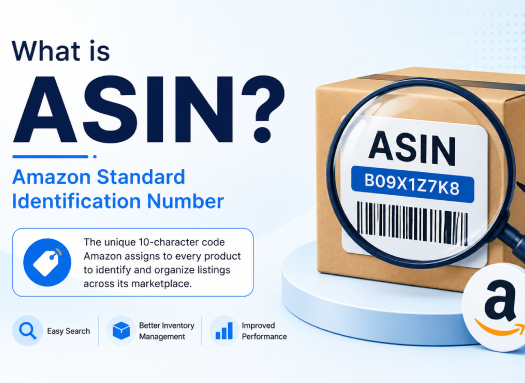
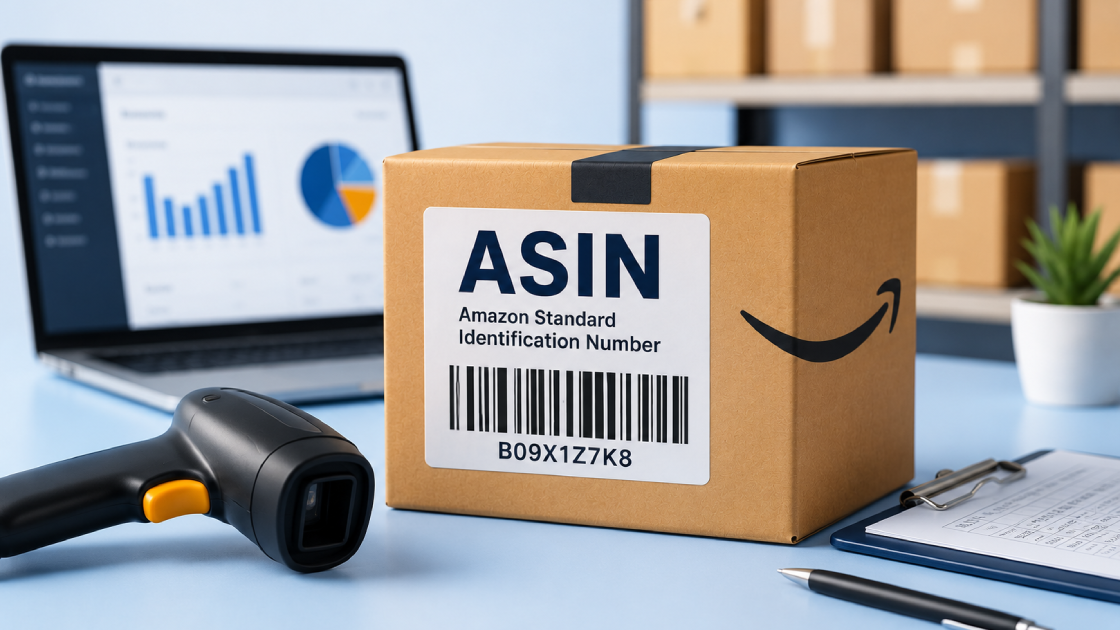
The Amazon Standard Identification Number is a unique 10-character alphanumeric code assigned by Amazon to identify products in its marketplace. Typically , each variation of the product gets its own ASIN . This assists Amazon to organize the catalog in a searchable manner .
An ASIN is a unique digital fingerprint for products sold on Amazon. It help Amazon organize inventory, and makes products easier for customers find. For example, if a seller sells a wireless keyboard, Amazon generates a unique ASIN for the product. Where the same keyboard is available in different colors or sizes, each will have a different ASIN.
Types of Amazon Labels
Amazon uses a variety of labels depending on the product and shipment structure:
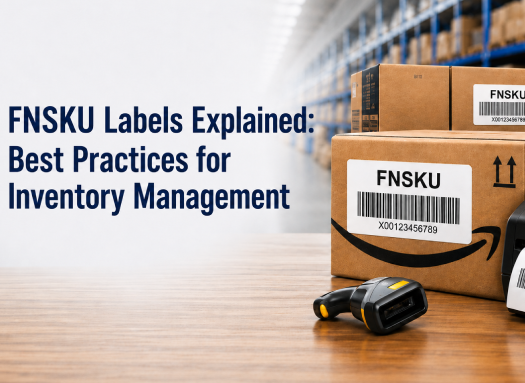
- FNSKU: Identifies the seller-specific unit in Amazon’s system; most FBA products require this.
- UPC: A worldwide product identifier used for listings and retail identification.
- EAN – The international equivalent of the UPC, often used in world markets.
- Manufacturer Barcode This is a GS1 barcode printed by the brand owner and used in some workflows.
- Shipping Label: Shows where each shipment is going.
- Carton Label: For tracking at the box level upon receipt.
- Pallet Label: Used for the proper identification and handling of all palletized shipments.
Fill out the form for a free logistics consultation!
Amazon FBA Label Requirements 2026
- They can vary based on the product category and the fulfillment workflow but here are the following best practices:
- Use label sizes on Seller Central and keep label sizes consistent across your shipments.
- Put labels on flat, visible surfaces.
- Heavy contrast for good printability.
- One scannable barcode per unit. Cover up any competing barcodes.
- Use packaging that is clean, secure and undamaged.
- Use proper poly bag thickness and warning labels when needed.
- Make sure we can scan bubble wrapped items.
- Expiration dates where applicable clearly marked.
- Use breakable labels for fragile items.
- Sets are clearly marked “Sold as Set.”
- Add suffocation warning to poly bags as needed.
- Labels also must be completely scannable through the inbound process to avoid delays or penalties.
Labels must remain fully scannable throughout the inbound process to avoid delays or penalties.
Amazon FBA Labeling Workflow
A structured workflow reduces errors and improves efficiency:
- Create organize product listing in Seller Central.
- Confirm the barcode are correct type (manufacturer barcode or Amazon FNSKU).
- Generate required Professional labels.
- Print your labels on high-quality equipment and materials.
- Properly label cartons, pallets or units.
- Cover obsolete or conflicting barcodes.
- Check all items and make sure for scanability and accuracy working properly.
- Pack products as per Amazon’s preparation standards.
- Dispatch the shipment and maintain Professional documentation.
- Monitor receiving status and resolve all discrepancies with priority.
Common Labeling Mistakes
Frequent labeling errors include:
- Using incorrect barcode types, leading to inventory rejection.
- Printing low-quality or blurry labels, causing scan failures.
- Applying multiple or duplicate labels on a single unit.
- Placing labels on curved, uneven, or damaged surfaces.
- Failing to cover existing barcodes, resulting in misidentification.
- Incorrect carton labeling or mismatched shipment details.
- Missing compliance labels such as “Sold as Set” or suffocation warnings.
These issues commonly result in delays, additional fees, and operational inefficiencies.
Why Amazon FBA Labeling?
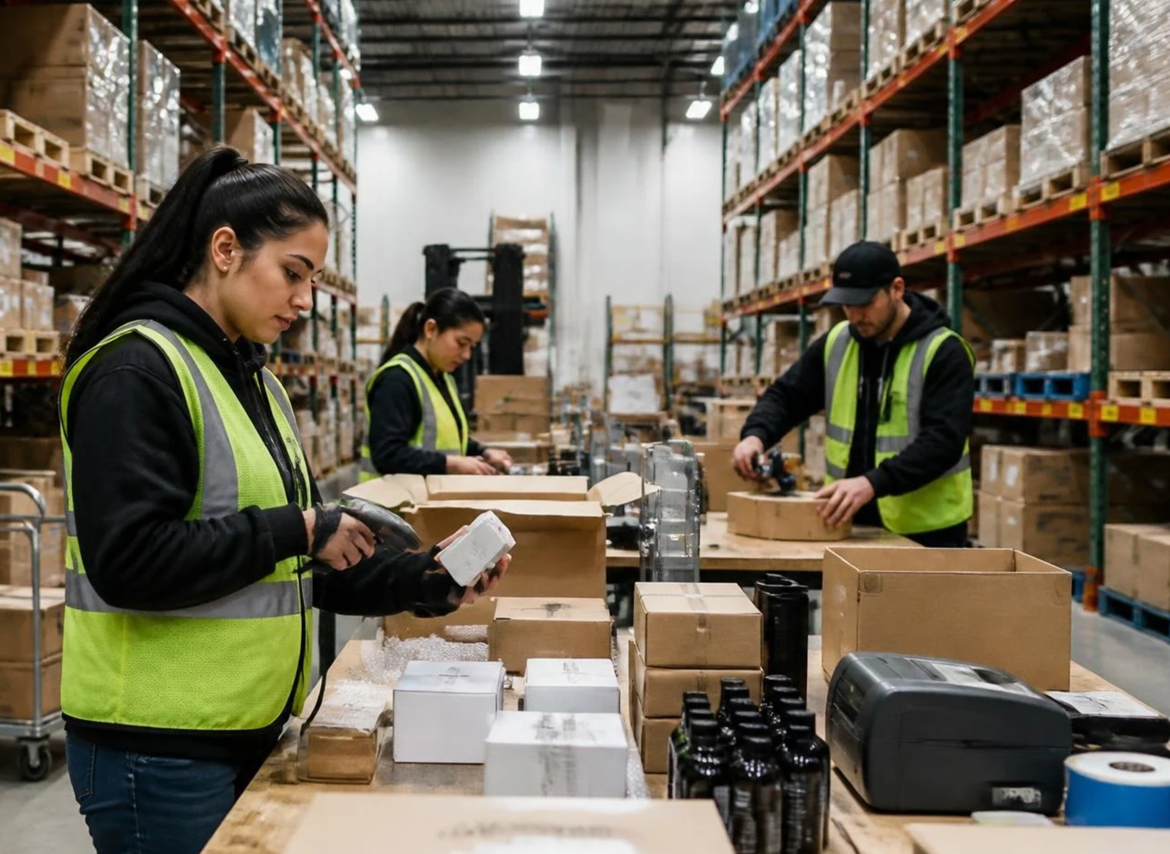
Labeling your Amazon FBA in house can be time consuming, and expensive, especially as your order volume increases. Outsourcing your labeling to a professional FBA prep center can help ensure that each product is labeled correctly, per Amazon’s standards, and can help reduce compliance issues, delays in receiving, and costly mistakes. This your inventory moves more efficiently through Amazon fulfillment centers and that your operations run smoothly.
With professional labeling services you can also expand your business during busy seasons without the need to hire more staff or disrupt your workflow. No need to waste valuable time on labeling and prepping. Focus on finding profitable products and optimizing listings, growing sales and managing inventory, while seasoned specialists take care of fulfillment prep.
Why you Choose Stock Ship
Stock Ship offers full FBA prep services including labeling, inspection, bundling, poly bagging, bubble wrapping, storage, inventory management and returns processing.
Their model of service is based on accuracy, speed and consistency, allowing sellers to mitigate compliance risk and optimize the journey from supplier to Amazon fulfillment.
Stock Ship offers comprehensive Amazon FBA prep services, including:
- Amazon FBA labeling
- Product inspection quality checks
- Bundling kitting
- Poly bagging
- Bubble wrapping protective packaging
- FNSKU barcode application
- Carton pallet labeling
- Inventory storage
- Inventory management
- Returns processing
- Shipment preparation forwarding
Frequently Asked Questions
What is Amazon FBA labeling?
It is the process of applying the correct barcodes and shipment labels so Amazon can accurately receive, store, and fulfill inventory.
Can Stock & Ship handle Amazon labeling?
Yes. Stock & Ship provides complete Amazon FBA labeling, inspection, packaging, bundling, storage, and fulfillment preparation services.
What happens if a barcode does not scan?
Amazon may delay receiving, apply manual processing fees, or reject the shipment.
What happens if I ship unlabeled inventory to Amazon?
Amazon offers a paid “FBA Label Service” that will label unlabeled units on arrival for a per-unit fee. If you don’t opt in, Amazon may reject the shipment or place it on hold until it’s corrected, which delays your inventory going live.
Can I print FNSKU labels myself, or does Amazon provide them?
You generate and print FNSKU labels yourself from Seller Central (under “Print Item Labels” in your shipment plan) using a compatible label printer or standard printer with adhesive label sheets – Amazon doesn’t mail physical labels to you.
Final Thoughts
While labeling appears to be a small operational task, it impacts cost, speed, and seller performance. When labeling is accurate, compliant and well executed inventory moves faster, there are fewer disruptions and operational efficiencies improve.
If you’re a seller looking for a more streamlined and reliable approach, working with a professional prep provider like Stock & Ship can make the process easy, and help you scale.