


A warehouse can have lots of space, but still be hard to manage.
The problem isn't so much the level of inventory. This is the arrangement of the inventory.
Without a clear system for storing products, employees waste time looking for items, moving boxes, checking product information and fixing errors. These little delays can have an impact on the whole fulfilment process at higher order volumes.”
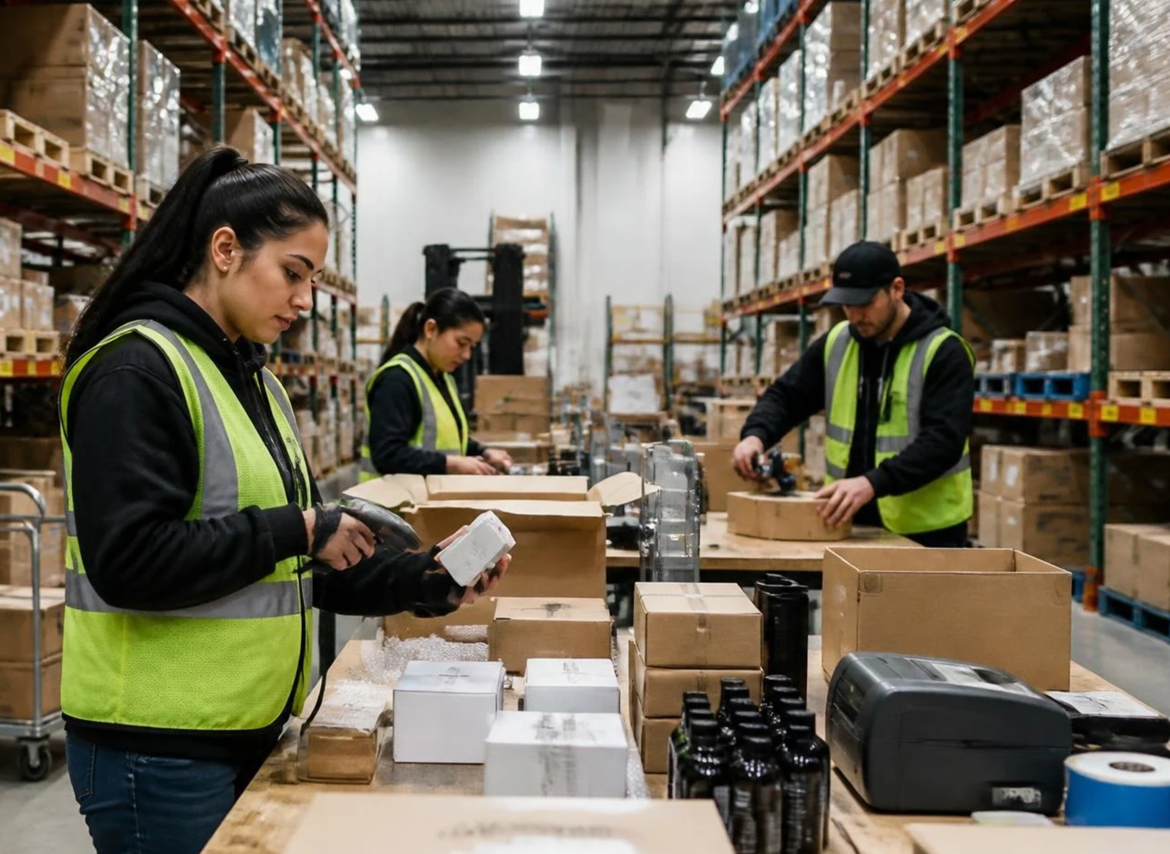
Organising inventory is even more important for Amazon sellers, wholesalers, ecommerce brands and businesses that use a 3PL. Products may have to pass through several stages before reaching the customer or an Amazon fulfilment center.
The basic flow might look like this:
Receive, Check, Store, Pick, Prepare, Pack, Ship
But how well that process works depends a lot on what happens in the meantime.
A good inventory organization system makes products easier to identify, easier to find, and easier to move. It also provides warehouse teams with a consistent process to follow as inventory volume changes.
Businesses can manage inventory for faster processing without adding unnecessary complications to warehouse operations in the following ways.
Why Organising Your Inventory Is Crucial for Faster Processing
Let us assume there are two warehouses with an equal number of products.
In the first warehouse each SKU has a designated location. Products are clearly labelled . Commonly picked items are easily accessible . Returns are segregated . Inventory records are updated when products move .
Products are placed in the second warehouse wherever there is space available. Similar products are kept together but there is no clear marking and staff often have to ask people where something is.
The difference is not necessarily the warehouse equipment.
It is the system.
When employees know precisely where inventory should be and how it should move they spend less time looking around and more time processing orders.
That can help to improve different parts of the operation including:
- Getting
- Storage
- Electing
- Refill
- Preparation for FBA
- Packing
- Freight
- Stocktaking
- Handling returns
So, inventory organization is more than simply storage. It’s part of the workflow fulfilment.
Start with a good SKU organization system
First thing you want to do is make sure each product is correctly identified.
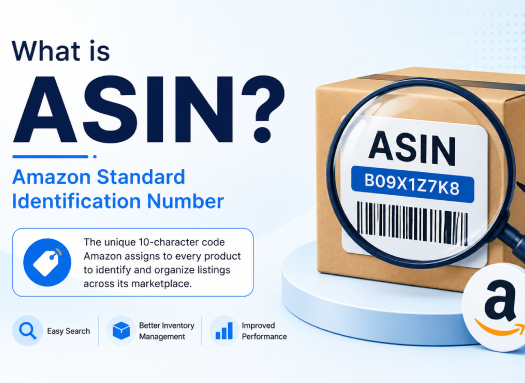
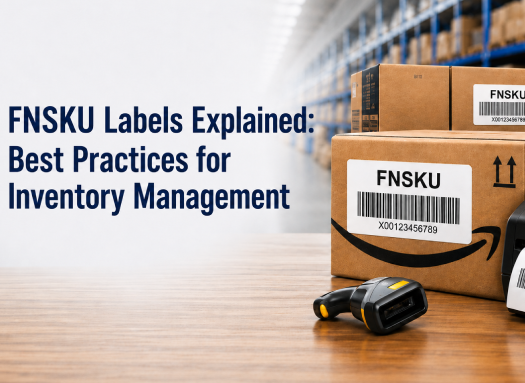
Every SKU should have a consistent identifier that the warehouse team can understand. This may include SKU numbers, product descriptions, barcodes, information related to ASINs, sizes, colours or other product attributes, depending on the business.
The main thing is consistency.
If employees use different names for the same product, confusion can set in quickly.
For instance, a system may refer to a product by its internal SKU, while the warehouse staff may refer to it by a short product name. This can increase the risk of choosing the wrong item if a number of products look similar.
A consistent SKU system forms a common language between inventory records and physical products.
This also makes future inventory checks much easier.
Assign a Clear Identity to Each Storage Location
Once the products are identified, the storage locations should also be identifiable.
A warehouse can use location codes for shelves, racks, bins, pallet positions or other storage areas.
For instance:
A-01-01
A-01-02
A-02-01
B-01-01
What is important is the logical structure, not the exact format.
“Look at an inventory record and you should be able to tell where the product is supposed to be.
This is especially useful when a warehouse has many SKUs.
Without location control, locating a specific product may be left to an employee’s memory of where it was located. That may work when the inventory is small but it becomes unreliable as the operation grows.
Location-based systems turn product finding from a memory exercise into a repeatable process.
Place Fast Moving Products Where They Are Easy To Reach
Not all SKUs perform at the same pace.
Some products can be ordered every day, others can be stored for weeks or months.
Treating both products the same can create unnecessary work.
Review high-volume products to determine if they are well positioned for the way the warehouse operates.
For example, if employees frequently have to walk to the far end of a warehouse to pick one of the company's most popular products, then the storage layout might need to be rethought.
The goal is not just to place the most popular products closest to the shipping area.
You should think about the whole workflow.
The product may have to be moved from storage to a prep station before being packed. Another product can go directly from picking to packing.
Those movements determine the best location.
Sort Inventory by Handling Requirements
Product characteristics should also be considered in making storage decisions.
Some products are easy to store and handle. Some will need to be thought about more.
Depending on the operation, inventory may need to be split according to:
- Size of product
- Weight of product
- Delicacy
- Packaging conditions
- Prep requirements
- Expiration considerations (S. 10)
- ReturnsStatus
- Location of marketplace
- Order frequency
- Handling & Storage Special handling practices
Separating products with different handling needs can make it easier for warehouse staff to understand the workflow.
For example, fragile products should not be handled the same way as standard durable products. Products that are waiting to be inspected should also be distinguishable from inventory that is already ready to be fulfilled.
The goal is simple: employees should be able to know what a product needs without guessing.
Set Up a Special Receiving Space
An incoming inventory should have a definite starting point.
A dedicated receiving area keeps newly arrived products from immediately mingling with inventory that is already available for sale or fulfilment.
On arrival of inventory, the warehouse can verify the shipment, identify the products, verify quantities, check for obvious issues and determine the next step.
Here is a basic receiving workflow:
- Record shipments arrival.
- Carton or pallet identification.
- Verify received products.
- Verify quantities.
- Monitor inventory as needed.
- Inspect for damage or discrepancies.
- • Storage Locations – Define
- Move approved stock into storage.
The exact process will vary from business to business, but the important part is to have a defined process.
Because there is no immediate place for an item, do not let a receiving area become permanent storage.
Keep Your Available Inventory Separated From Returns
Putting returns straight into regular inventory can be confusing.
A returned product may be perfectly resalable, but that needs to be determined through a proper inspection process, not assumed.
Returns are subject to:
- Checking the product.
- Inspection of packaging
- Check condition
- Name change
- Rebox
- Changes in inventory status
- Disposal or other reprocessing
Products that are returned should be quarantined until their status is known so they are not accidentally processed as inventory ready to ship.
The same applies to damaged or questionable inventory.
The warehouse should clearly distinguish between:
Inventory available
and
Action needed inventory
This simple distinction can help you avoid unnecessary fulfilment headaches.
Design Storage to Fit the Real Fulfilment Workflow
A warehouse layout should facilitate the movement of products.
If inventory is frequently moving long distances between receiving, storage, picking, prep, packing and shipping, there may be opportunities to improve your layout.
Physically follow a normal order is instructive.
Start with where the product is stored.
Then ask:
- Where does the employee collect it?
- Is the product subject to inspection?
- Does it need prep?
- Where is the preparation performed?
- Where is it stuck?
- Where does the finished order wait?
- How far does it travel before it ships?
This may mean there is too much movement.
The solution is frequently not to add more storage, but to remove these redundant steps and enhance warehouse organization.
Keep Accurate Inventory Records
Physical organization only works if the inventory records are in line with reality.
Simply put, the warehouse is chaotic if the system says a product is in one place and it's actually moved to another, even if the shelves look tidy.
Inventory movements must therefore be entered in the correct records.
This matters when:
- New Inventory Arrived
- Products are shipped
- Picking orders
- Stock is allocated
- Returns are in
- Broken units are removed
- Deliver products to Amazon
- Inventory transfer between locations
Regular inventory checks can also help to detect discrepancies between the recorded and physical quantities.
For growing businesses, inventory accuracy is more critical as even a small discrepancy can affect several orders.
Use Replenishment Locations for High Volume Products
When the warehouse layout allows, a further useful tactic is to separate reserve inventory from the stock used for picking on a day-to-day basis.
For example:
Order→Picking Location→Replenishment→Reserve Stock
This approach can enable management of high volume SKUs.
This way, warehouse employees don’t have to repeatedly seek through larger quantities of stock, but can refill a designated picking location as needed.
The method does not need to be complicated.
The thing to keep in mind is:
- Where stock is held in reserve
- Location of active picking stock
- When replenishment is required
- How to record inventory movement
A well-defined replenishment process can help avoid the common situation where a product is somewhere in the warehouse but can’t be easily located when an order needs to be processed.
Do not mix similar products without clear identification
Picking errors can be a big source of similar looking products.
This is especially true when a company sells products that have different:
- Dimension
- Colours
- Variants
- Packs by amount
- Models > >
- PACKAGE
- Marketplace IDs
Even if two products look almost identical, they may be completely different SKUs.
Clearly labelled and logically separated storage can reduce confusion.
Wherever possible, products which could easily be confused with one another should not be stored together simply because they look alike or will fit into the same storage space.
A convenience during put-away can mean more work during picking.
Review warehouse based on actual demand
Inventory organization is not something that should be forever static.
Products evolve.
Sales volumes are moving. Variation in demand. New SKUs have been added. Some products still move the same speed as before.
What was a good storage solution six months ago might not be the best choice anymore.
- Review regularly:
- Fast moving SKUs
- Slow moving stock
- Products that are refilled often
- Items that cause picking activity again and again
- Products needing special handling
- Items taking up valuable storage space
The goal is not to re-sequence the entire warehouse every week.
Instead, look at real inventory and order activity to find areas for improvement.
Common Mistakes When Organising Inventory
Stockpiling inventory in available space
Temporary storage often becomes permanent storage.
Employees will waste time looking for products without assigned locations.
Ignore Product Movement
The logical storage location may not be the best one when the picking route is considered.
SKU Mixing
Confusion between similar looking products can easily be caused by poor identification.
Not updating locations
Moving inventory without record updates leads to future search problems.
Returns Mixing into Sellable Stock
Returned inventory may need to be inspected before it can be made available again.
Allowing Receiving Areas to Become Storage Areas
Receiving and storage have different functions. Having those functions separate can make the processing more predictable.
Making a system more complicated than necessary
A simple system that everyone follows is more useful than a sophisticated system that employees have difficulty maintaining.
A Practical Checklist for Inventory Setup
Before you redesign your warehouse layout, ask:
- Is there a clear identity for each SKU?
- Is there a specific location for each storage area?
- Can employees locate products without memory?
- Are fast moving products readily available?
- Are comparable products easily identifiable?
- Is incoming inventory different from available stock?
- Are returns and damaged goods clearly separated?
- Are inventory transactions recorded?
- Is there a clear process for refilling?
- Does the physical layout make picking / packing easy?
- Are slow moving products taking up valuable space?
- Can a new employee quickly learn the storage system?
If you answer no to several questions, your inventory organization may be generating extra work for processing.
How a 3PL Can Assist with Inventory Processing
For example, third party logistics providers consider warehouse organization as part of the service.
A 3PL can take inventory, warehouse products, ready marketplace shipments, pick customer orders, pack products and do other fulfilment needs.
That means the warehouse needs a system that can do more than just store stuff.
Stock & Ship offers inventory storage, Amazon FBA and marketplace readiness, ecommerce fulfilment and more from its Oregon facility. The company provides services for inventory storage and distribution, FBA/marketplace preparation, DTC and FBM fulfilment, returns, bundling, kitting and other value-added services. Stock & Ship services
Stock & Ship also highlights a workflow where sellers can ship inventory to its Oregon facility, have products prepared and stored, and then have inventory fulfilled or shipped as needed. Stock & Ship
This kind of structured workflow can be helpful for sellers handling Amazon, Walmart and direct-to-customer inventory when inventory has to stay organised until it is transferred to its final destination.
The most important thing to look at when choosing any fulfilment partner is how the inventory is received, identified, stored, located, picked, packed and shipped.
How to Integrate Inventory Organization Into Your Daily Operations
Inventory organization is not a one-time warehouse cleaning event.
It works best when it’s embedded in the daily operating process.
A simple routine could be:
During reception:
Check and confirm incoming inventory before storing.
At time of put away:
Put the products in the places they belong.
When choosing:
Please confirm the SKU before you remove inventory.
While replenishing:
Move reserve inventory as defined in process.
Returns: In case of
Hold returned products until status is established.
For Inventory Check:
Investigate differences instead of just adjusting numbers without understanding the cause.
These habits help keep order as inventory fluctuates.
Summary
It’s not about making every shelf look perfect, it’s about organising inventory for quicker processing.
The key is to build a warehousing system that makes the next step obvious.
Employees need to know what a product is, where it should be, if it is available and where it needs to go next.
Smooth processing is possible with clear SKU identification, defined storage locations, logical product placement, separate inventory status areas, accurate records and a workflow based warehouse layout.
For Amazon sellers and ecommerce businesses, these improvements can become more and more important as SKU counts and order volumes increase.
An efficient warehouse doesn't have to be complex. It requires a system that makes the inventory easy to find, easy to understand, and easy to move.
The real purpose of organising inventory is to reduce searching, reduce unnecessary movement, and provide a more predictable path from receiving to fulfilment.
FAQs (Frequently Asked Questions)
How to organise warehouse inventory?
First, assign a unique identifier to each SKU and designate products to specific storage locations. Next, sort locations by sales activity, product features, handling requirements, and fulfilment process.
Reorganise inventory to speed up order processing?
Well-organised stores save employees time spent looking for products and moving inventory unnecessarily. Well-placed location and product identifiers can also help create more consistent picking and replenishment.
Should high-speed stock be separated?
It’s good to have popular products in easy to reach areas. Some warehouses also have dedicated picking and reserve locations for high volume inventory.
How to arrange returned stock?
Returns should generally be kept separate from available inventory until their condition and status can be reviewed. This helps prevent wrong products being selected for new orders.
How often should a warehouse re-organize inventory?
There is no schedule that applies to every business. If SKU counts, order quantities, product demand, or fulfilment requirements go up or down drastically, inventory organization should be re-evaluated.
Yes, a 3PL can handle and store ecommerce inventory ?
Yeah. Many 3PL providers provide receiving services, storage, inventory handling, picking, packing, marketplace preparation and fulfilment services. It is important for sellers to consider how the provider actually identifies, stores, tracks and processes inventory.