


An Amazon FBA shipment does not become operationally complete the moment a carrier picks it up. The shipment still has to arrive, be received, scanned and reconciled. If the quantity Amazon records does not match what you expected to be received, the discrepancy can create extra investigation and administrative work.
For sellers managing wholesale or high-volume inventory, preventing these problems starts before the cartons leave the warehouse. A reliable process connects the seller's purchase records, warehouse receiving, unit preparation, carton information and final shipment documentation.
Amazon's Seller Central guidance and community material describe shipment discrepancies as differences between what a seller expects to send and what Amazon records as received. Common contributors include inaccurate counts, damaged or missing labels, incorrect shipment information and preparation problems. The practical lesson is simple: the more evidence you create before dispatch, the easier it is to identify where a problem occurred.
What is an FBA inbound shipment discrepancy?
An inbound discrepancy occurs when the inventory associated with an FBA shipment does not reconcile as expected after Amazon receives and processes it. The issue may involve missing units, unexpected quantities, condition differences or other receiving variances.
Not every apparent mismatch means inventory is permanently lost. Shipment processing can take time, and inventory may move through different statuses before the final quantity is clear. Sellers should therefore review the shipment status and reconciliation information before assuming there is a permanent shortage.
Fill out the form for a free logistics consultation!
The best prevention strategy is to build a chain of custody for every shipment. That means knowing what arrived at your prep location, what passed inspection, what was prepared, what was packed and what actually left the facility.
Where discrepancies often begin
1. Supplier receiving errors
The first number in the process can already be wrong. If a supplier sends 498 units instead of 500 and the warehouse records 500 without a physical count, every later document can appear correct while the shipment is actually short.
2. SKU mixing
Similar-looking products create unnecessary risk. Two variations may share packaging characteristics but have different SKUs or identifiers. Physical separation and SKU-level counts help prevent cross-labeling and cross-shipping.
3. Incorrect unit counts
A fast packing process can make counting errors easy, especially when cartons contain many identical units. A count should be recorded during receiving and checked again before the final shipment is closed.
4. Carton information problems
Shipment documentation and carton-level information should agree with the physical contents. If the recorded information does not accurately represent what is inside the carton, investigation becomes more difficult.
5. Damaged or unreadable labels
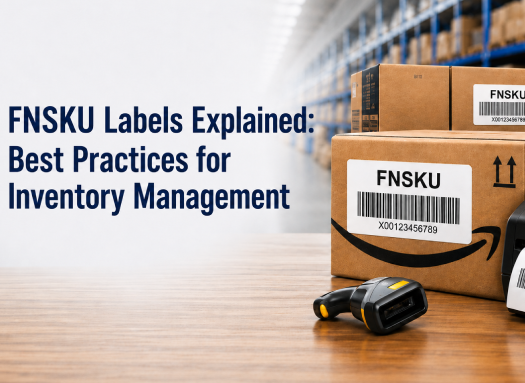
Labels need to remain scannable and correctly associated with the inventory. A damaged, covered or incorrect label can interfere with identification during the inbound process.
How to build a stronger reconciliation process
Start with receiving. When inventory reaches your warehouse or prep center, record the expected quantity and the physically received quantity separately. If there is a difference, investigate it before the inventory is prepared.
Next, assign clear storage locations. Inventory that has been received but not yet prepared should not be casually mixed with finished inventory. Status-based organization makes it easier to see what is waiting for inspection, labeling, packaging or shipment.
Before shipment creation or dispatch, conduct a final SKU-level count. For larger shipments, consider a second verification by another team member. The purpose is not bureaucracy; it is to catch errors while the inventory is still physically accessible.
Photographic records can also be useful for internal quality control. Photos should be treated as supporting evidence rather than a substitute for accurate counts. A clear photo of a prepared carton, its label and the surrounding shipment record can help a team investigate questions later.
What sellers should document
A practical shipment file can contain

- Supplier invoice or receiving document
- Expected unit quantities
- Actual received quantities
- SKU and product references
- Notes about damaged or excluded units
- Preparation instructions
- Final packed quantities
- Carton information
- Shipment identifiers
- Dispatch date
- Carrier or tracking information
- Any later reconciliation notes
The exact records will vary by operation, but consistency matters more than complexity.
How a prep center can reduce avoidable discrepancies
Outsourcing preparation does not remove the seller's responsibility for inventory accuracy, but a structured prep center can add process controls between supplier delivery and Amazon shipment.
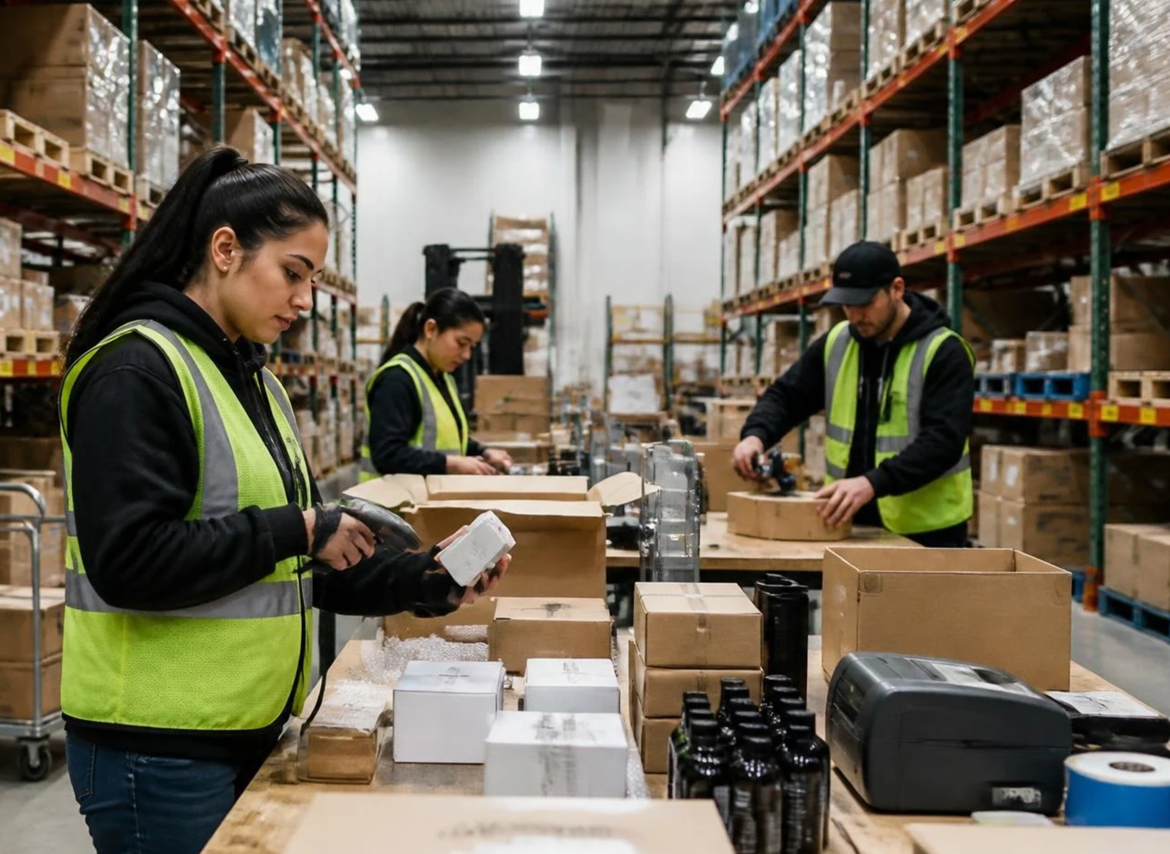
A good workflow should give inventory a defined receiving point, inspection stage, preparation stage and dispatch stage. Each transition should have a clear quantity and status.
For example, if 1,000 units arrive, the warehouse should know how many were physically received, how many were damaged, how many were prepared and how many were shipped. If 995 units are dispatched, the five-unit difference should have an explanation rather than becoming a mystery after the shipment is gone.
This is particularly valuable for sellers whose suppliers ship directly to a warehouse. Instead of relying on the supplier's packing list alone, the prep operation can physically verify the incoming inventory.
How Stock & Ship Can Help
Stock & Ship supports Amazon FBA and marketplace preparation, receiving, inspection, labeling, storage and fulfillment services from its Oregon operation. For sellers using an external warehouse, the goal is to create a controlled handoff between supplier inventory and marketplace inventory.
The exact services required will depend on the product and shipment. Sellers should confirm preparation requirements, pricing, storage terms and documentation procedures before sending inventory.
A practical pre-dispatch checklist
Before releasing an FBA shipment, ask
- Does the physical quantity match the final shipment record?
- Has every SKU been separated and verified?
- Were damaged or questionable units removed from the shipment?
- Are labels readable and associated with the correct inventory?
- Do carton records match the physical cartons?
- Has the final count been independently checked where appropriate?
- Are supplier, receiving and dispatch records saved?
- Can the team explain every quantity difference?
If the answer to these questions is consistently yes, the operation has a much stronger foundation for resolving discrepancies when they occur.
Conclusion
FBA receiving discrepancies are easier to manage when sellers treat inventory accuracy as a process rather than a final inspection. The most useful controls happen before inventory leaves the warehouse: physical receiving, SKU separation, accurate counts, preparation checks, carton verification and complete records.
The objective is not to guarantee that every inbound shipment will be processed without a variance. The objective is to make your side of the shipment traceable and accurate, so a problem can be identified and investigated quickly.
For growing sellers, a documented workflow becomes increasingly valuable as SKU count, supplier volume and shipment frequency increase. Whether the work is performed internally or through a prep partner, consistent inventory controls help protect both time and working capital.
Frequently Asked Questions
Amazon FBA inbound shipment discrepancies: How can sellers reduce them?
Use accurate receiving counts, SKU separation, label checks, final reconciliation and consistent shipment records before dispatch.
What should be included when calculating FBA prep cost?
Include preparation, receiving, materials, storage, outbound handling and realistic exception or rework costs.
What service levels matter when choosing an FBA prep center?
Receiving visibility, inventory accuracy, prep quality, turnaround definitions, communication, storage organization and exception handling are key.
Does Amazon still provide U.S. FBA prep and item labeling?
Amazon states that it stopped offering prep and item-labeling services for U.S. FBA shipments created from January 1, 2026.
Should sellers test a prep center before sending large volumes?
A controlled test shipment can help evaluate receiving communication, preparation quality, inventory controls and outbound handling before scaling.